


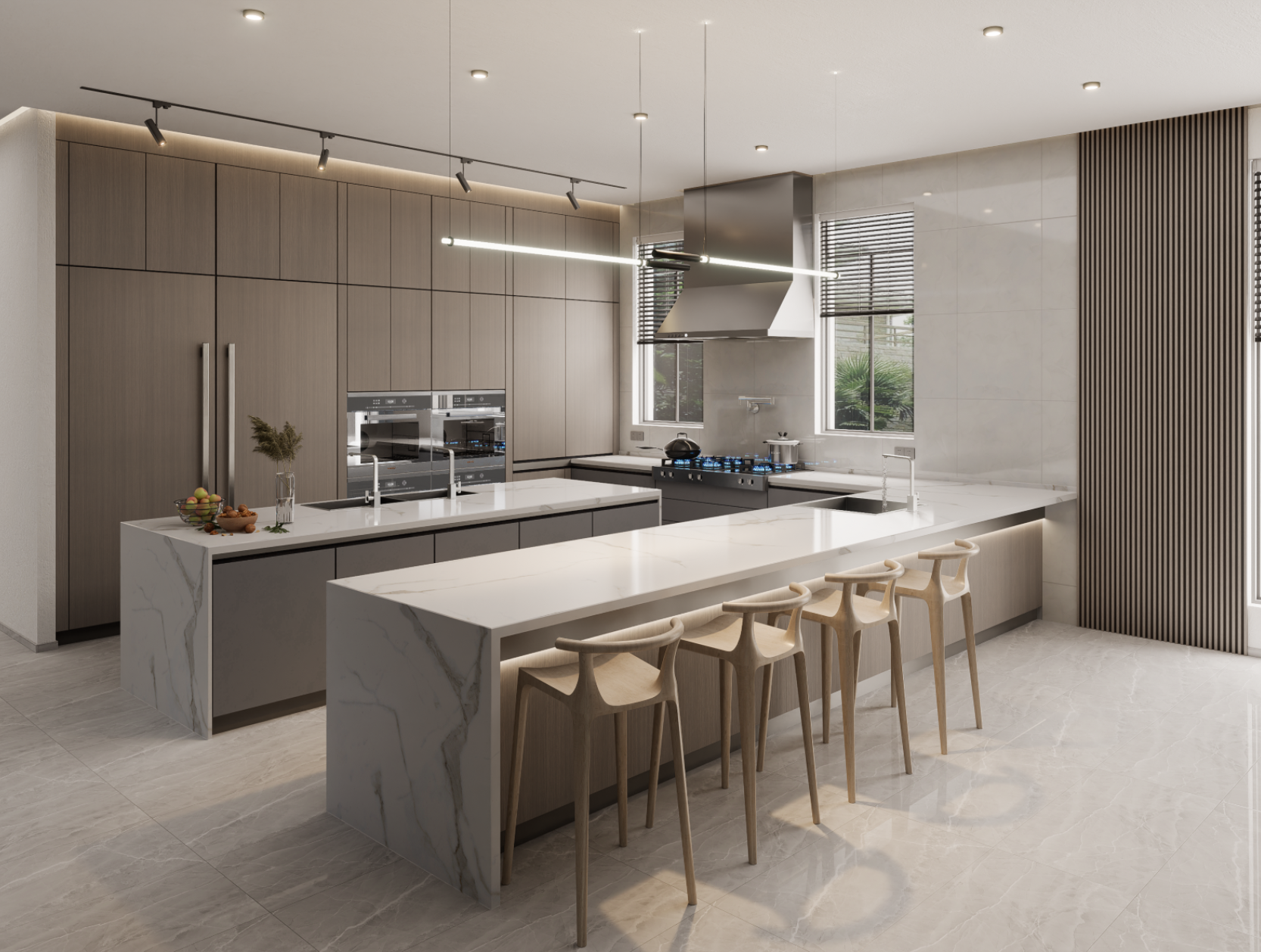
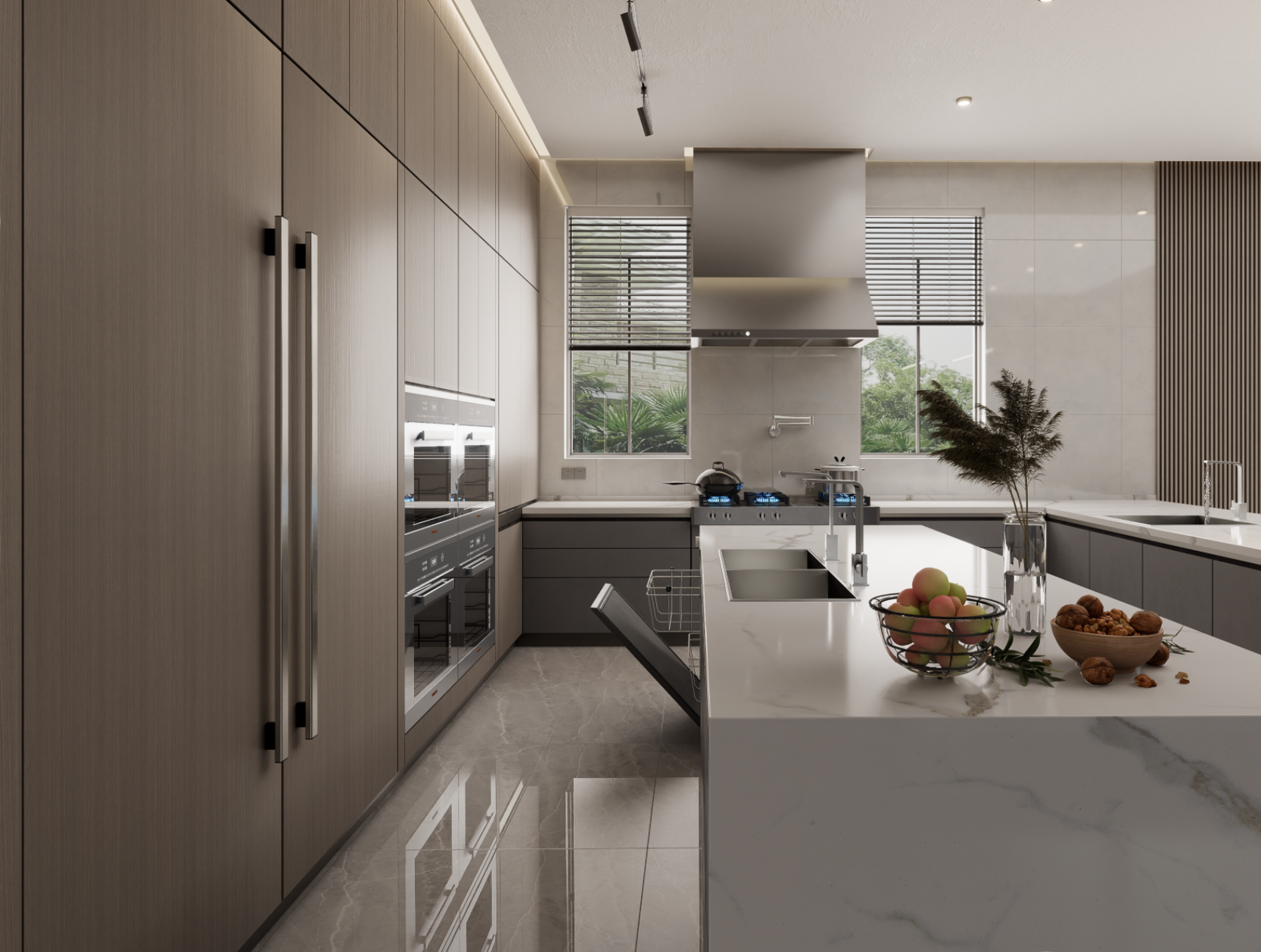


In the bathroom and kitchen design, we often have to spend hours debating the color of the paint or stone species, as well as hardware finishes. But an extremely important element in a design’s final design and budget is a technical aspect that many customers don’t know the name of until you explain the concept: The Cabinet Overlay.
For designers and contractors, the layer is the “secret sauce” of cabinetry. It determines if a kitchen appears sleek and contemporary or traditional and classic, or if it’s budget-friendly and practical. It influences everything from the kind of hinges you select to the amount of fillers you require against the wall.
This complete guide will help you understand the full overlay and partial overlay cabinets in detail:
Which Overlay Style is Most Often Specified Lately?
Before we go into the details, let’s take a look at what kind of look both partial and full overlay support. Both have their own unique way of upgrading your space. For example:
Full overlay: A sleek and seamless “European-inspired” look.
Partial overlay: Classic, traditional, budget-conscious American style.
What is Cabinets Overlay?
The overlay is the amount of the cabinet frame that is visible. The cabinet overlay refers to the size of the cabinet’s face frame and the fronts of drawers and doors that can be covered.
The “faceframe” of the cabinet box is apparent when you look towards the side. It is comprised of rails (vertical components) as well as rails (horizontal pieces). The overlay you choose to use is basically a decision of the amount of “cabinet frame” you want to view.
Partial Cabinet Overlay
Partial overlay, also known as “Standard Overlay,” has been the mainstay of the industry for many years. In this arrangement, the drawers and door fronts are slightly bigger than the openings, but they leave a significant part of the frame exposed.
Usually, the partial overlay door will cover half of the frame from all sides. Since face frames typically measure 1.5 inches in width, that leaves a 1-inch gap that is visible between door fronts and drawer doors.
Full Cabinet Overlay
Full overlay cabinetry had been popular in the past decade, and is now still the most famous choice for transitional, Modern, and Contemporary styles. It completely covers the cabinet frame, making the doors look like they are joined to each other.
If you are using a fully overlay style that includes doors and drawers, the fronts cover the entire frame. In most cases, one-quarter inch from the frames is seen between cabinets. For the uninitiated, the full-overlay kitchen appears to be similar to “frameless” (European-style) cabinetry, even though it utilizes a strong frame.
Full Overlay Cabinets Vs Partial Overlay: Major Differences
Both full overlay and partial overlay cabinets are loved equally. The choice between the two depends on what look you want for your space. Understanding the major difference between the two helps you in making an informed decision.
Visual Geometry and Aesthetics
When it comes to aesthetics, the extent of the cabinet’s frame that remains visible after the doors are shut defines the look. The full overlay cabinets give a seamless and modern appearance. On the other hand, the partial overlay cabinets are more popular among traditional kitchen designs. For a clean look, homeowners prefer cabinets with their faceframe fully covered by the doors.
Partial Overlay: The Traditional “Grid”
Partially overlay is the standard American design. Since the doors cover only a tiny portion of the frame (usually 1/2 inch), A significant portion of the frame’s wood is left unfinished. It creates a “grid-like” pattern across the kitchen. It is perfect to use with Farmhouse, Rustic, or Craftsman styles, in which it is the “chunkiness” of the wood frame is a great addition to the style.
Full Overlay: The Seamless “Canvas”
Full overlays are designed to cover the complete frame of the face, leaving just one tiny gap (usually 1/8 to 1/4 inch) within the door. It mimics the appearance of European cabinets that are frameless. Frames disappear, leaving a neat, unidimensional surface for doors with faces. It is essential in modern, Minimalist, and Transitional designs where pure lines are the main goal.
Installation and “Wall Forgiveness”
This is where the common distinctions become practical. The full and partial overlay cabinets differ in their installation.
Partially Overlay (The Flexible Choice)
While the installation of the full overlay cabinets is considered more difficult than the latter, the partial overlay is considered easier to install. Because there is a huge gap between the wall and the door (usually around 1 inch), it makes the installation much simpler. When the walls are bent, or he floor is a little off the mark, the gap will be large enough to conceal the imperfections.
Full overlay (The Best Option)
Full overlay is known as “unforgiving.” Because the doors’ gaps are tiny, the cabinet box isn’t plumb or level can cause “stepped” doors or uneven vertical lines. When installing a full overlay, you need to make sure to add additional time to allow for the hinge’s adjustment. You’ll likely be spending long hours turning those six-way adjustment screws to achieve the “laser-straight” look the client wants.
Hardware and Access
The overlay controls how the user physically interacts with the cabinet. When you’re in a Partial Overlay kitchen, it is not necessary to worry about your fingers getting caught between doors. In the case of a Full Overlay setup, the gaps are so tight that if the hinges haven’t been set correctly, doors may even rub against each other, which can cause paint chipping or wood damage as time passes.
Partially Overlay
Partial overlay cabinets have enough space between the doors to open each door without any hurdles. Technically, you can open these doors without pulls or knobs by simply grasping the edge of the door. You can fit all kinds of handles or knobs as there is enough space. Moreover, you can add built-in handles on the sides of the doors for easier access.
Full Overlay
The pulls, knobs, or handles are required for full overlay cabinets in most cases. There is no space to put your finger beyond the door’s edge. Moreover, as there is not enough gap between the doors, you must choose the hardware that requires minimal space. This way, it becomes easier to install the doors in a sequence.
The “Filler” Requirement
One of the most important differences is the amount of clearance required for corners and walls. The filler requirement is not confined to either of the styles. You may or may not want the filler for your cabinets. However, if you want, the requirements may vary to some extent.
Partial overlay
The partial overlay cabinets have a gap that prevents the cabinets from hitting each other. Therefore, it is often required to use no additional fillers since its 1-inch reveal comes with an integrated buffer. But you may need the filler if the cabinets are near the wall or appliances. For example, 4-6 inches of filler space is required to open the doors fully without hitting your fridge, oven, or any electronics. It’s better to analyze the space or consult with an expert for ideal results.
Full Overlay
If you install a full overlay door that is installed directly against the wall, the door’s interior is the entire length of the cabinet. If you open it, the door’s corner instantly hits the wall. It also hits the casing of the door. Therefore, you must make use of the fillers. A 1-inch or 2-inch strip of filler is standard at each wall’s end to ensure that the door will open beyond 90 degrees. If the door isn’t able to open beyond 90 degrees, drawers and roll-out trays are locked within the cabinet.
Hinge Technology
The hinges that are used for both styles differ in their structural design. The type of hinges you choose should be based on the look you want for the cabinets. Any style you choose must not interfere with the overall layout of partial or full overlay cabinets.
Partial Overlay
Partial overlay cabinets support all types of hinges, but the bent or crank hinges are common. Most often, it uses “semi-concealed” hinges as well as conventional “wrap” hinges. These hinges are simpler, less sturdy, and usually visible on the sides. The 1/2″ to 3/4″ hinges are used to make a part of the frame visible.
Full Overlay
The full overlay cabinets need hinges with straight arms to fully cover the faceframe. The majority of them use completely hidden “Euro” hinges. These hinges are more complicated and allow for three-dimensional adjustment (Up/down and left/right, in/out). While they give a sleeker appearance, they’re also more costly and require regular tightening when doors get lower. The hinges range from 1 1/4″ to 1 3/8″ or more, specific to the cabinet design.
Full Overlay Cabinets vs Partial Overlay: Pros
Partial Overlay
Effectiveness in Cost: This is the most affordable choice. Because the tolerances are larger and the doors do not have to be precisely sized as hinges, they are usually cheaper and easier to install.
Minimal hardware is required (Technically): Because there’s a gap between the two doors, people may often wrap their fingers along the edges or the door’s edge to unlock it. Although hardware is typically included to enhance the look of the door, it’s not strictly required for the purpose of.
Durability in High-Use Spaces: Because the doors aren’t flush with each other, there’s a lower chance of doors colliding with each other or being “nipped” at the corners if the house settles or the hinges move slightly out of alignment.
The Look: Partial overlay is often associated with country-style cabinets. It’s like it’s “built” and less “manufactured.” But it could make kitchens look outdated when it is paired with the wrong style of door or the wrong finish.
Full Overlay
Maximum Aesthetic Impact: It provides a consistent and monolithic appearance. The emphasis is on the door’s style as well as the grain of wood, rather than it being the “grid” of the cabinet frames.
Maximizes Storage Access: Because the doors are bigger, the clear opening can be a little more accessible, particularly when coupled with modern hinges to open the door completely away from the way.
Enhances The Value Of Your Home: Currently, full overlays are viewed as “premium” or “custom” upgrades when compared to partial overlays, which makes it an important reason to consider renovations.
Full Overlay Cabinets vs Partial Overlay: Cons
Partial Overlay
Outdated Look: The seams are visible, which gives the cabinets an outdated look. You have to cover the frame with paint or laminations to make a more modern design.
Visible Hinges: As there is a gap between the doors, the hinges are more visible on the sides. To solve that issue, you can choose specific types of flat hinges that are not very visible.
Less Storage & Access: the door size is usually smaller, which means you may find it difficult to reach some items in the back. It also makes it difficult to store big utensils or electronics.
Potential for Damage: The gap allows damage if you don’t cover the edges of the doors properly using sealers or finishes.
Full Overlay Cabinets
Expensive: Full overlay looks expensive since it costs more to create and install. To get a consistent look, you have to spend a lot of time and effort, which adds to the labour cost as well.
Precision: There is no space for errors. If the cabinets aren’t level and straight, those tiny gaps of 1/4 inch (reveals) can appear to be uneven, instantly destroying the appearance of high-end.
Hardware: You can’t open these doors without knobs or pulls because there isn’t enough space to grasp the door’s edge.
Damage Issues: Since the door covers nearly the entire frame, an overlay door requires space to open. If you put a complete overlay cabinet right against a wall or a deep appliance (like the 24-inch deep refrigerator), it will be able to hit the wall prior to when it can open to 90 degrees.
Full Overlay vs Partial Overlay Cabinets: Side-by-Side Comparison
| Difference | Partial Overlay | Full Overlay |
| Visual Reveal | Large (~1″) | Minimal (~1/4″ or less) |
| Difficulty of Installation | Easy/Forgiving | Hard/Precise |
| Cabinet Face | Frame is a design feature | Frame is hidden |
| Home Value | Standard | High/Premium |
| Drawer Space | Smaller drawer fronts | Maximized drawer fronts |
Which One Wins?
There’s only one “correct” overlay that meets the project’s objectives. Select a partial overlay when your budget is limited. The style is rustic or traditional American, and you need an installation that can take the punishment of old, unfinished walls.
Select full overlay for when you are looking for the most elegant, seamless, or contemporary look. If you have the money for high-end fabrication as well as the expertise for an expert installation.
Conclusion:
Partial overlay and full overlay are the two cabinet overlay types that give opportunities to create design variations. Both are equally celebrated and loved by homeowners. The choice between the two depends on your personal preferences or needs. The partial overlay cabinets have gaps that look traditional but can be covered with paint or laminations to create a unique look. The full overlay cabinets, on the other hand, give a seamless look, but there is difficulty in installation.
Need expert assistance? Feel free to contact us at Five Cabinetry to get your cabinets perfectly installed with guaranteed precision!
Also Read: Framed vs Frameless Cabinets