


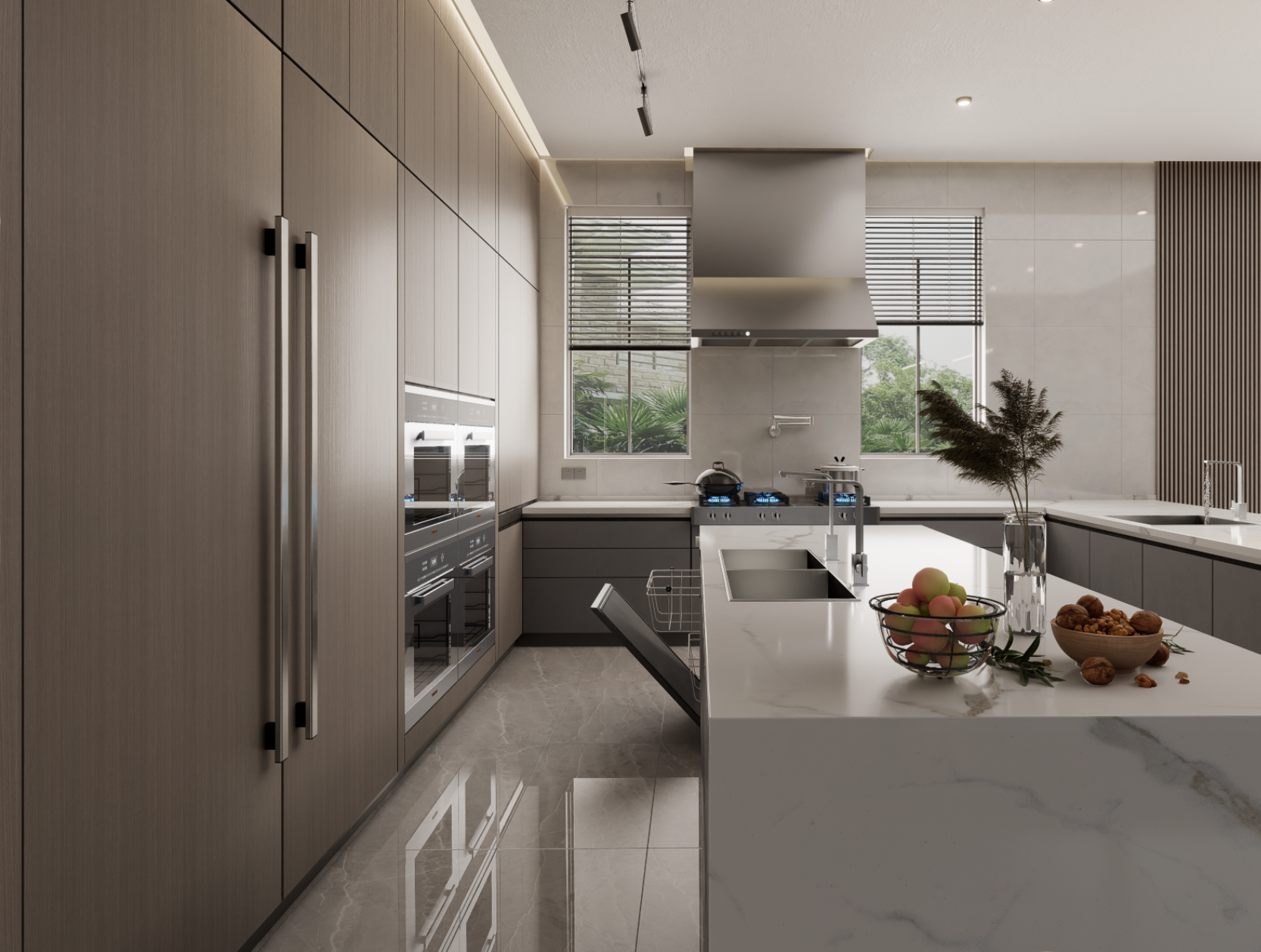


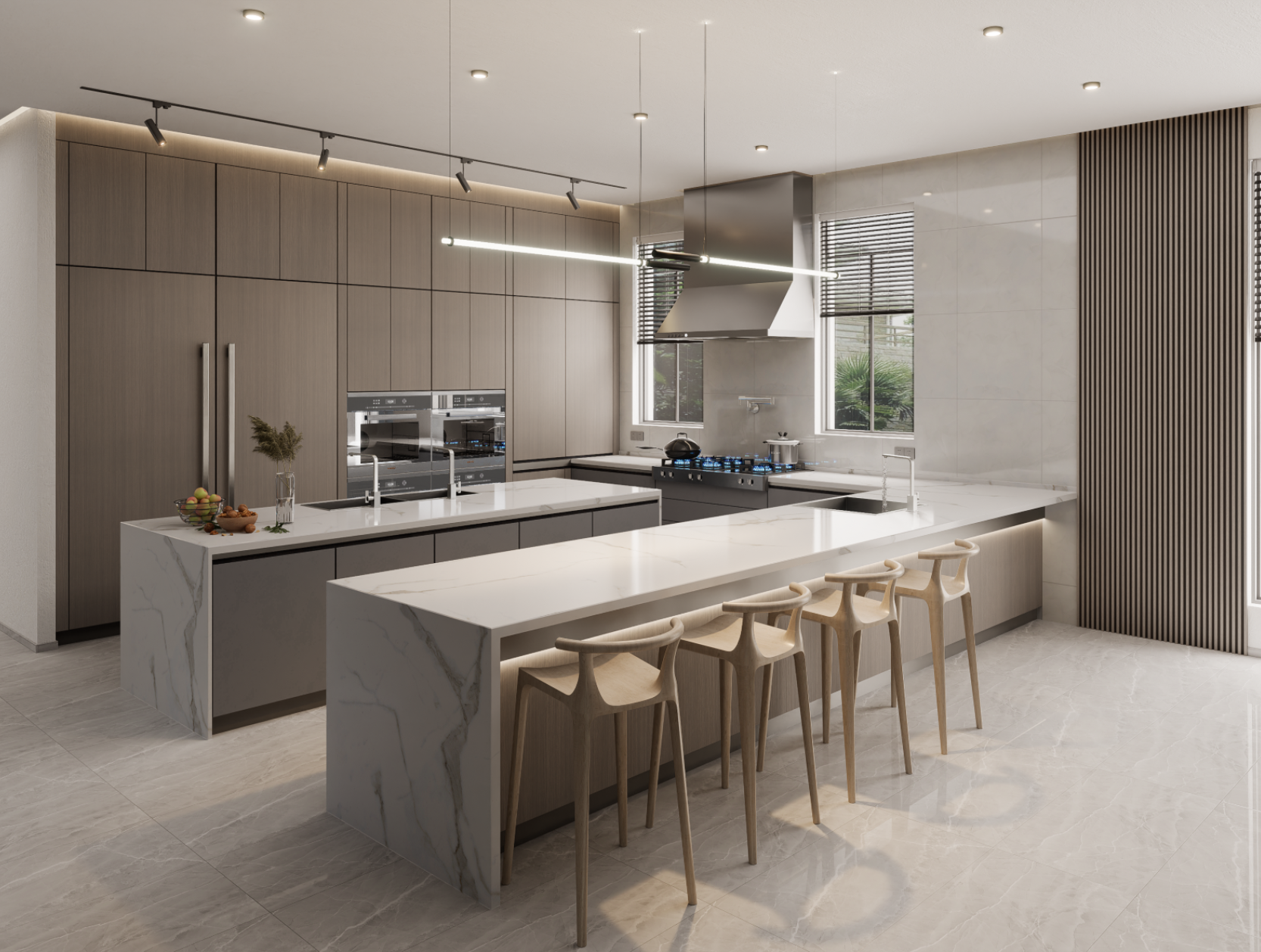

Manufacturing high-quality cabinets requires a precise sequence of engineering, assembly, and finishing processes that ensure both aesthetic beauty and long-term structural integrity. From the initial selection of high-density materials to the final inspection of hardware alignment, every phase of production dictates how well your kitchen will perform under years of daily use.
Understanding how cabinets are manufactured allows homeowners and designers to distinguish between budget-grade products and professional-grade installations.
This guide explores the critical engineering steps that transform raw materials into high-performance, long-lasting cabinets.
Introduction: The Invisible Details
Cabinet production has evolved drastically in the modern world, shifting from traditional, localized carpentry workshops into automated, high-precision facilities. This technological leap explains why two seemingly identical cabinets can look identical on a showroom floor but exhibit vastly different lifespans over time.
When a factory cuts corners by using thin wood, weak staples, and cheap paint, the cabinets start to break down long before you ever notice it. To protect your investment, the kitchen industry uses clear durability standards to separate premium cabinets from cheap ones.
According to the official ANSI/KCMA A161.1 Quality Standard (a benchmark managed by national safety and manufacturing groups), a certified premium cabinet box must pass tough factory tests:
- The 25,000 Door Test: The hinges and drawer slides must open and close 25,000 times without breaking.
- The 600-Pound Weight Test: Wall-mounted cabinets must hold 600 pounds of weight without shifting, cracking, or pulling away from the wall.
Factories utilize these exact metrics to justify their engineering tolerances. Designing a box to withstand 600 lbs ensures that when a homeowner installs heavy granite or quartz countertops, the underlying structure handles the dead weight without bowing, sagging, or risk of collapsing under vertical stress.
Step-By-Step Overview of Modern Cabinet Production
Step 1: Selecting the Core Materials
The material profile defines the structural integrity of your build. While solid wood is highly valued, choosing the wrong underlying substrate can lead to extensive structural failure down the road. For non-warping cabinet box construction, engineered multi-layer panels represent the true industrial standard for stability.
Today, many cabinet boxes are made from plywood or MDF instead of solid wood. Because these materials lack a natural grain, they will not warp or split from kitchen humidity.
- Manufacturing Process: Raw wood panels pass through precision digital moisture-meter scans to ensure uniform stability across different atmospheric zones before processing.
- Structural Quality Benchmarks:
- The Edge Test: Look for the distinct, stacked grain of plywood at raw edges, which signals superior screw-holding power compared to lightweight substrates.
- The Density Check: Avoid unstable, industrial-grade particle board cabinets; choose high-density engineered substrates that feel dense and heavy.
- Substrate Selection: Utilize moisture-resistant plywood for wet zones (like sink bases) and dense engineered wood for door profiles to achieve a mirror-smooth finish.
Step 2: Sizing and Precision Cutting
Modern panel sizing depends entirely on advanced CNC (Computer Numerical Control) nesting technology, which serves as the “digital brain” of the production floor. By replacing traditional manual saws with computer-guided blades, computerized blueprints slice sheets with a degree of precision that manual tape measures simply cannot replicate.
Modern cabinet factories use CNC routers because computer optimization maximizes raw substrate yields, lowers material costs, and keeps processing errors below a fraction of a millimeter.
- Manufacturing Process: High-volume nesting tables use an automated cabinet panel saw system to isolate individual CNC cabinet parts sizing layouts simultaneously.
- Precision Performance Indicators:
- The Gap Inspection: Uniform, razor-thin margins between doors and drawers confirm automated sizing tolerances.
- The Squareness Test: True, computer-cut panels align so cleanly that the uninstalled unit stands perfectly level on any flat plane without racking or leaning.
Step 3: Box and Face Frame Joinery
The physical strength of a cabinet box relies entirely on how its intersecting panels are locked together. While mass-produced alternatives rely on flush-fit butt joints held together strictly by finish nails or retail wood screws, professional factories utilize blind dado cabinet construction. Slotting the top, bottom, and side panels into deep, machined channels ensures that the structural load of heavy stone countertops is supported by the wood itself rather than the hardware fasteners.
Utilizing interlocking blind dado joints provides 1.5 to 2 times more glue surface area than a basic flush butt joint. This grooved geometry forces the wood to lock mechanically, allowing the cabinet box to support heavy countertop loads without relying on metal brackets that can strip out over time.
- Manufacturing Process: Advanced boring equipment routs precise, interlocking grooves into side panels, laying out a hidden “lock-and-key” foundation for how cabinet panels are joined.
- Load-Bearing Quality Benchmarks:
- Check for Blind Dados: Look inside the box parameters to verify that the shelving and frame elements seat into machined channels.
- Face Frame Construction: Premium configurations feature a solid wood face frame glued and mechanically pocket-screwed to the front edge of the cabinet box, maximizing structural squaring.
Step 4: Sealing the Exposed Edges (Edgebanding)
Raw, exposed wood edges are highly vulnerable to everyday kitchen spills, household cleaner degradation, and ambient humidity. Heavy-duty edgebanders solve this issue by fusing a protective, high-durability skin over raw edges at application temperatures exceeding 300°F.
Industrial Polyurethane Reactive (PUR) hotmelt glues use a moisture-curing process to create an irreversible, waterproof shield. While traditional EVA glue softens and peels around 65°C, PUR withstands extreme conditions from -30°C to 150°C. This makes PUR essential for kitchen cabinets, ensuring intense heat and steam from dishwashers, kettles, and ovens never damage the inner wood core.
- Manufacturing Process: High-heat rollers melt the adhesive to form an unbreakable bond before precision trimming blades shave the edge banding flush.
- Moisture Defense Benchmarks:
- The Seam Search: Peeling or visible adhesive lines are the number one sign of cheap edgebanding glue, especially near high-steam zones like dishwashers.
- PUR Edgebanding Selection: Unlike EVA glue, which can remelt under the heat of a self-cleaning oven or toaster, PUR chemically cross-links to form a permanent, waterproof seal.
Step 5: Crafting Cabinet Doors, Drawers, and Shelves
Drawers and doors undergo the highest frequency of physical interaction and mechanical stress in any residential home. For traditional configurations, timeless five-piece doors engineered with independent rails and stiles offer advanced dimensional protection against climate movement, while internal drawer boxes must withstand decades of pulling force.
Premium drawer boxes with interlocking dovetail joints can handle loads over 100 lbs. Their “puzzle-piece” geometry creates a mechanical lock that transfers pulling force directly into the wood teeth, preventing the drawer face from separating without relying on weak staples or glue.
- Manufacturing Process: Heavy-duty shaping clamps press drawer components together using a tight mechanical interlock before setting.
- Tensile Strength Benchmarks:
- Dovetail Construction: Pull the drawer completely out of the box to check the corners. The presence of interlocking, puzzle-piece dovetails confirms a drawer box built for long-term abuse.
- The Drawer Face Pull: Avoid drawer bodies held together only by staples and glue, as the front panel will eventually pull free from the box.
Step 6: Sanding and Surface Finishing
Sanding and surface finishing are essential steps in modern cabinet production because they create the smooth, rock-hard shield that protects the underlying wood from daily wear. Instead of painting by hand on a job site which often traps floating dust and leaves messy brush marks, modern cabinet makers use automated spray lines to apply a perfectly even, protective coating. These coated pieces pass immediately through high-intensity ultraviolet (UV) light tunnels that instantly bake and dry the surface.
Advanced UV-cured topcoats are up to 3 times more resistant to scratches and everyday kitchen oils than cabinets painted by hand on a job site.
- Manufacturing Process: Coated parts pass immediately through specialized UV-curing tunnels where targeted radiation instantly cross-links the polymers, baking the paint into a protective shell.
- Surface Coating Benchmarks:
- UV-Cured Finish Durability: The finished surface should feel completely smooth, hard, and cool to the touch with no stickiness or soft spots.
- Thickness Uniformity: Precise automated spray heads maintain a strict mil thickness across the entire panel surface to eliminate dripping or running.
Step 7: Assembling the Box & Fitting Hardware
During the final assembly phase, individual components are transformed into a single rigid unit. The process utilizes structural adhesives to secure joints permanently before placing the entire box inside automated pneumatic case clamps to square the framework.
Based on research, premium concealed soft-close hinges are factory-tested to endure 200,000 opening and closing cycles. Sourcing these high-grade components guarantees a smooth 15- to 20-year lifespan, completely eliminating the door sag, misalignment, and fluid leaks common with generic hardware.
- Manufacturing Process: Once the box is locked in a perfectly square state, automated jigs handle the fitting cabinet hardware process, installing hidden hinges and under-mount drawer slides.
- Mechanical Integration Benchmarks:
- Flawless Real-World Alignment: Mechanized hardware installation ensures that moving parts align correctly on the first pass, preventing crooked doors or uneven gaps between panels.
- The Whisper Glide: Drawers should move cleanly along their tracking without grinding or catching.
Step 8: Final Inspection and Packaging
Before any cabinet leaves the factory floor, a detailed final inspection checks every surface under high-intensity lights for scratches or minor flaws. Every cabinet box undergoes high-intensity light inspections to detect surface scratches, finish variations, or structural imperfections before being loaded onto freight trucks.
Using hard-shell foam corner protectors absorb heavy vibrations and bumps during transit, keeping delicate cabinet corners safe on the road.
- Manufacturing Process: Technicians perform specialized cabinet shelf deflection tests using calibrated leveling instruments to ensure that loaded shelves will not bow or sag more than an acceptable 1/16 of an inch.
- Logistical Quality Indicators:
- Foam-Armor System: Hard-shell corner protectors shield the unit against shipping dings and pressure fractures during rough loading transitions.
- The Transit Check: Ensure structural packaging is robust, fully enclosing the unit before distribution.
Your Quick Cabinet Showroom Checklist
When planning a kitchen renovation, relying on certified industrial standards is your best buying guarantee.
To help you distinguish between high-value investments and low-grade commodities on the showroom floor, use this mobile-friendly kitchen cabinet showroom buying guide as your quick reference checklist:
| Checkpoint | Premium Construction | Cheap Alternative |
| Box Material | High-density plywood or premium MDF | Lightweight, low-density particleboard |
| Joinery Method | Blind dado or interlocking grooved channels | Flush butt joints joined with staples or nails |
| Edge Defense | Sealed with waterproof, chemical PUR adhesive | Glued with heat-sensitive, peel-prone EVA hotmelt |
| Drawer Corner | Interlocking puzzle-piece dovetail joints | Stapled, glued, or pinned square corners |
| Finish Surface | Factory UV-cured topcoat (3 to 5 mils thick) | Site-applied hand paint or simple laminate film |
| Hardware Action | Rated for 25k+ to 200k+ cycles with smooth deceleration | Unrated hinges that bounce or slam shut |
Conclusion
Today, high-performance cabinetry relies on a flawless sequence of digital precision and chemical engineering. A cabinet’s true lifespan depends on the invisible details: computer-guided cuts that eliminate margins of error, mechanical wood joints that lock under weight, and industrial adhesives that resist humidity. Recognizing these technical standards transforms the buying process, allowing you to choose an investment that will never sag, warp, or fail under the rigors of a modern household.
Every step in this modern cabinet production line, from the first computer cut to the final quality inspection, works together to build something that lasts. By finishing the process with strict factory checks and wrapping the corners in thick foam for safe shipping, the factory makes sure your kitchen arrives without a single scratch.
If you are ready to see how this careful production process creates a better, stronger home, come explore our collections at Five Cabinetry today.